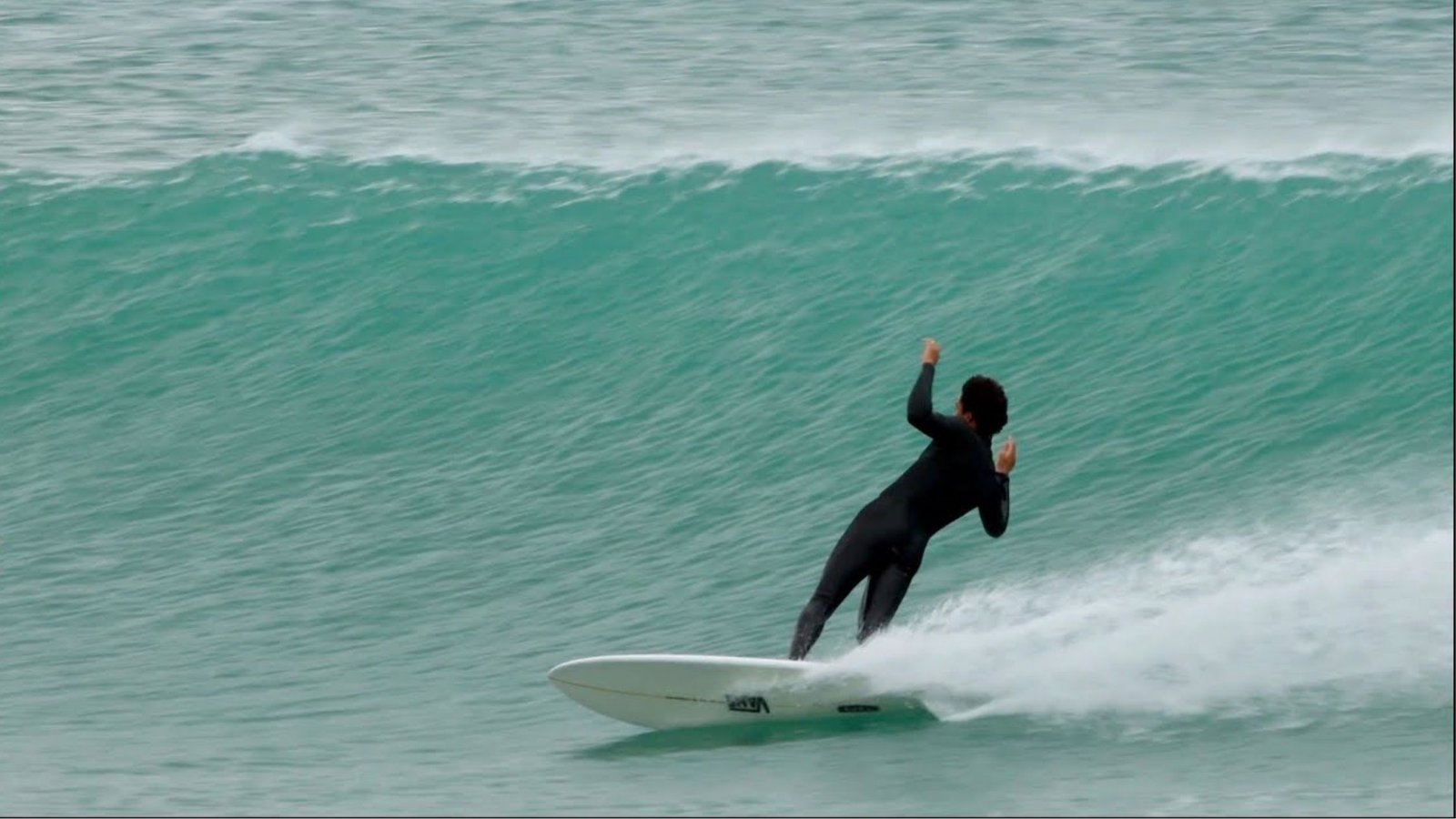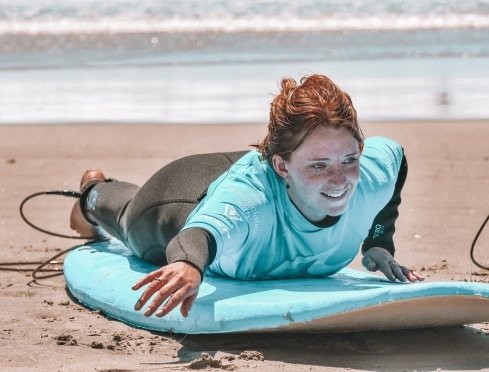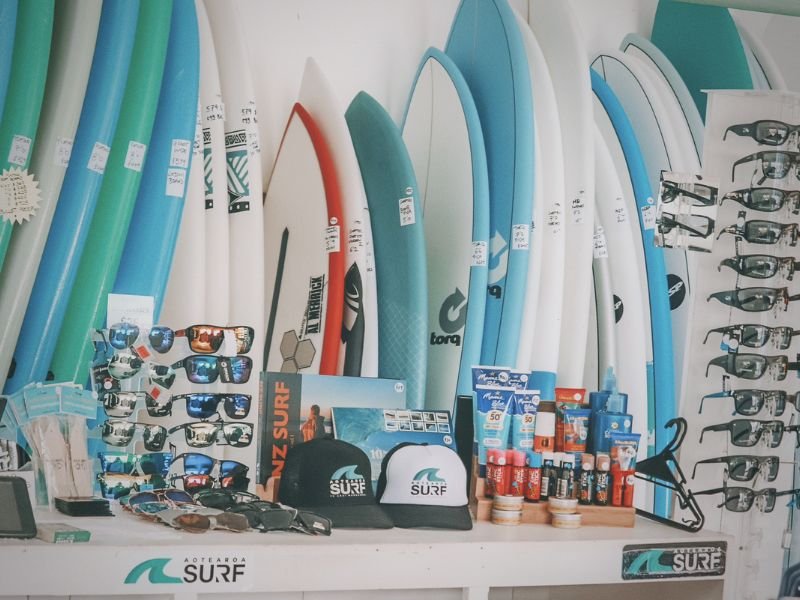
Walk into any surf shop and tell them you're a beginner, and there's a good chance they'll try to sell you something that looks like what the pros ride. Resist that. The board that looks the coolest is probably the worst one for your progression.
For beginners and most intermediates, volume is the thing that matters most. Volume, measured in litres, determines how buoyant the board is. More volume means you float higher, paddle faster, catch waves more easily and have more margin for error when your technique isn't perfect. Less volume means the opposite: everything is harder, and every mistake is punished.
As a rough guide, beginners typically need a board with volume equal to or greater than their body weight in kilos (so a 70kg surfer starts on 70+ litres). Intermediates can work down from there as their technique improves, but most intermediates are riding boards too small for their current ability.
For most people learning at Orewa, Te Arai or Sumner, a foam longboard (8 to 9 foot) or a midlength (7 to 8 foot fibreglass or epoxy) is the ideal starting point. These boards are forgiving, fast to paddle and catch waves that shorter boards would miss entirely.
The rocker, the curve of the board from nose to tail, also matters. Boards with more rocker turn more easily but lose speed in weak waves. Boards with flatter rocker are faster but less responsive. For NZ beach breaks which are often punchy but not massive, a moderate rocker suits most surfers.
Bottom line: ride a board that makes surfing fun, not one that makes it hard. You'll progress faster, catch more waves and actually enjoy yourself.