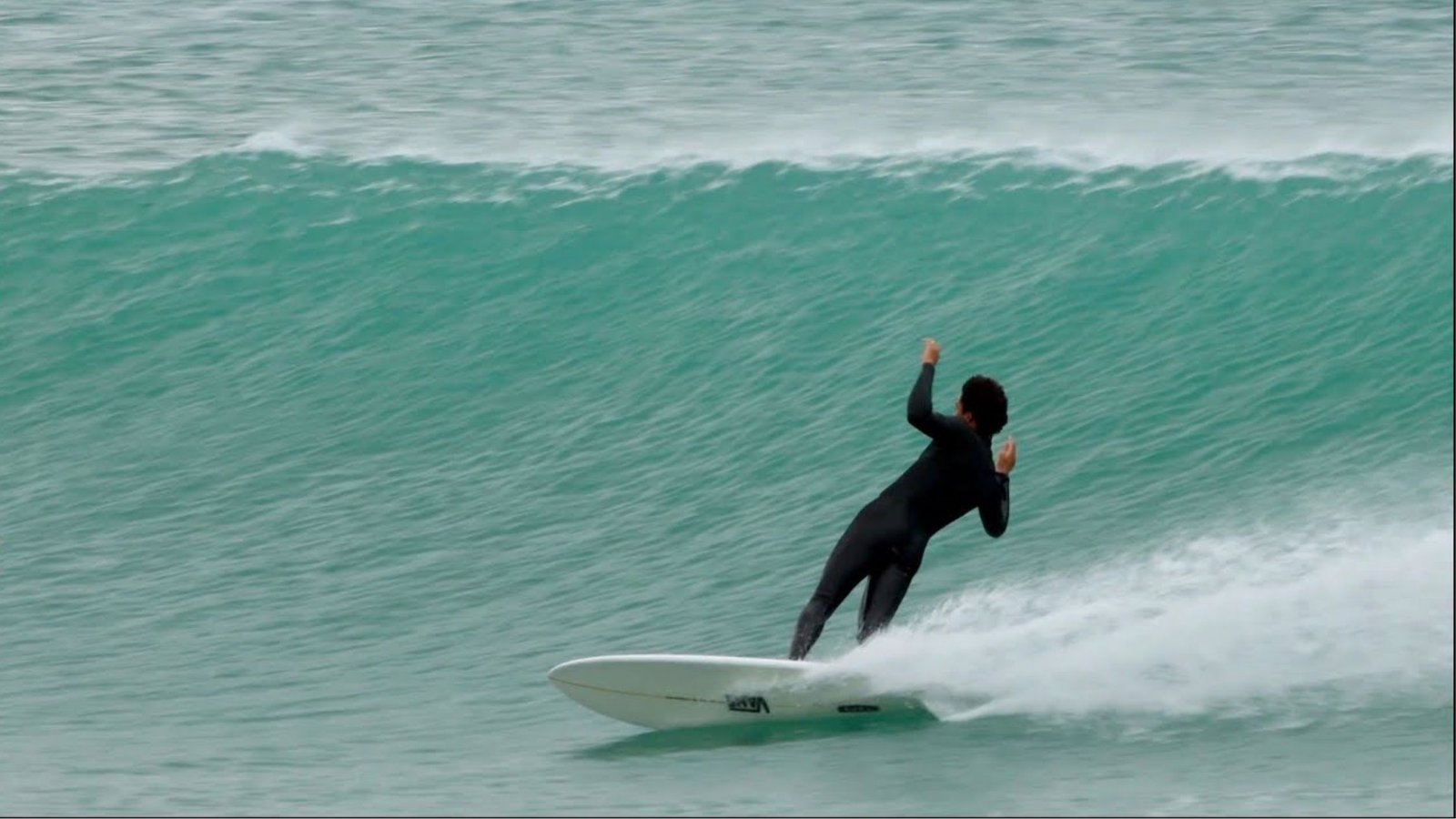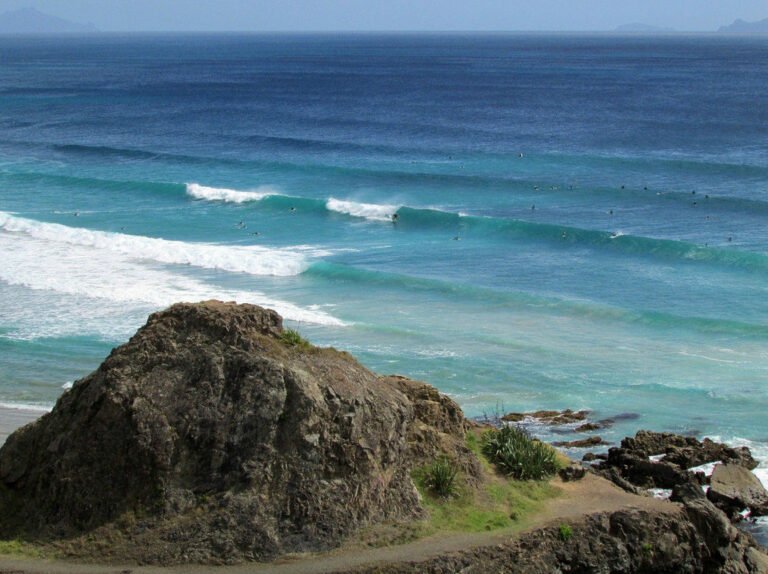
Te Arai sits on the east coast of Northland, an hour north of Auckland. The beach runs from the Mangawhai sandspit in the north to Pakiri in the south. The headland that divides the beach is Te Arai Point. The break on the north side of the point is Te Arai. The break on the south side is Forestry, named for the pine forest behind it. Both work in similar conditions, so it pays to check each before paddling out.
The conditions that produce the best beginner surf: a small NE to E swell, a light SW or W offshore wind, and a mid to high tide. Under those conditions the inside reform, the whitewater that has already broken once and is pushing toward the shore, is clean, consistent, and waist high to chest high. That is exactly the wave you want to learn on. Hollow waves break too fast for a beginner to react. Flat waves don't have enough energy to push you up onto your feet. The Te Arai inside reform is the goldilocks zone, and the reason we run our beginner programs here.
Why it works for first-timers specifically: it is a sand bottom beach break. You can stand up in waist deep water. There is no reef, no rocks at the takeoff, and the bottom contour is forgiving. When you fall, and you will fall, the worst case is a soft landing on sand. Compare that to learning at Piha's north side, where the consequences of a poor wipeout are real, or Muriwai, where the rip currents and shore dump make even getting into the water demanding.
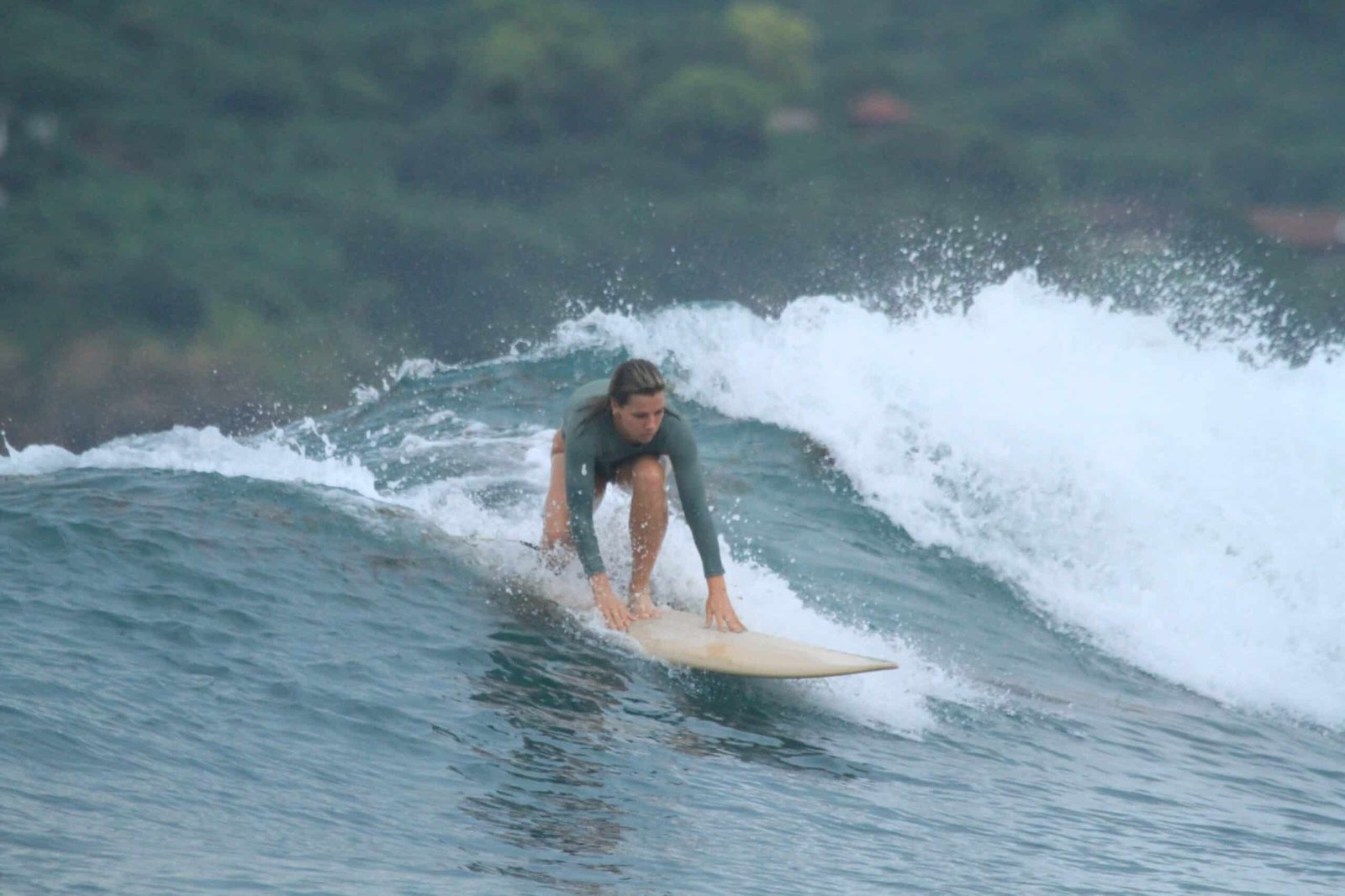
What we cover in a first two hour lesson: 20 minutes on the sand covering the pop-up, paddle technique, and ocean safety. The pop-up is the single most practised move in surfing and the one most beginners learn wrong. We teach the explosive chest to feet motion, not the slower knee up step that is harder to undo later. Then 90 minutes in the water, riding inside reforms and gradually moving to slightly less broken waves as you progress. By the end of a two hour lesson, the typical first-timer has caught between 8 and 15 waves and stood up on a meaningful number of them.
Three mistakes we see at Te Arai specifically. First: looking down at the deck of the board on takeoff. Your weight follows your eyes. Head down means weight forward, which means nosedive. Second: hesitating on the pop-up. The wave moves at the same speed regardless of how ready you are. Commit early. Third: paddling for waves that have already broken too far out. Te Arai's inside reforms are generous, but if you paddle for an unbroken wave on a foam board, you will usually be too late.
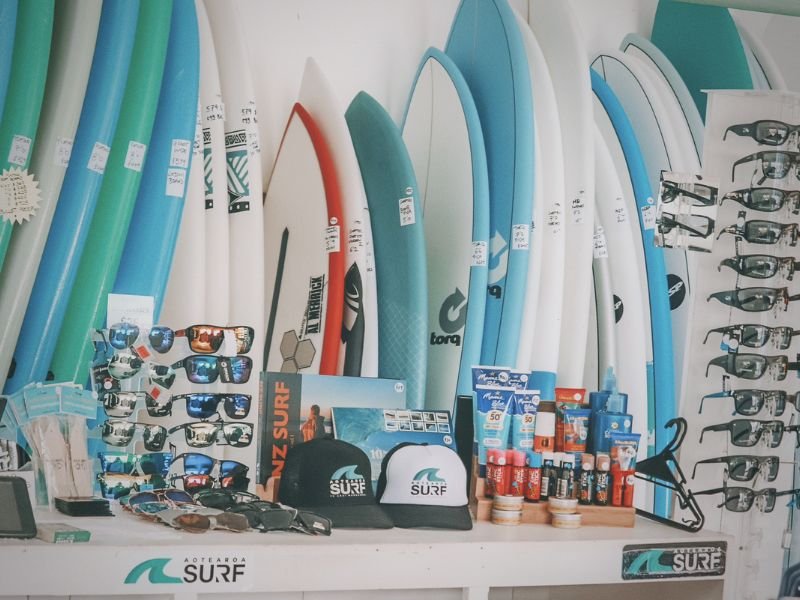
Logistics. Park at the main Te Arai car park off Te Arai Point Road. Parking is free. Basic toilets and outdoor showers are on site. Aotearoa Surf has a shop, accommodation, and hire centre at the top of the road at 11 Te Arai Point Rd, where you can pick up a board, a wetsuit, or join a lesson. The nearest petrol station is in Mangawhai, 15 minutes north.
Wetsuit, by month: 3/2mm full suit from October to April. 4/3mm from May to September. Water temperatures range from around 22°C in February down to 13°C in August. Te Arai is exposed to wind from most directions. Wind chill matters more than the water temp suggests, so err thicker if you are between sizes, or if you would rather not cut a session short shivering.
After the surf: head 10 minutes south to Te Arai Links Cafe and Restaurant in Tomarata. It is a must after a Te Arai session. If you have an hour spare, the walk to Te Arai Point from the car park, about 15 minutes each way, is one of the better short walks in Northland. Pohutukawa lined headland, panoramic view of the break, and on clear days you can see the Hen and Chickens Islands offshore. For lessons, board hire, and accommodation, check the Lessons tab in this app.