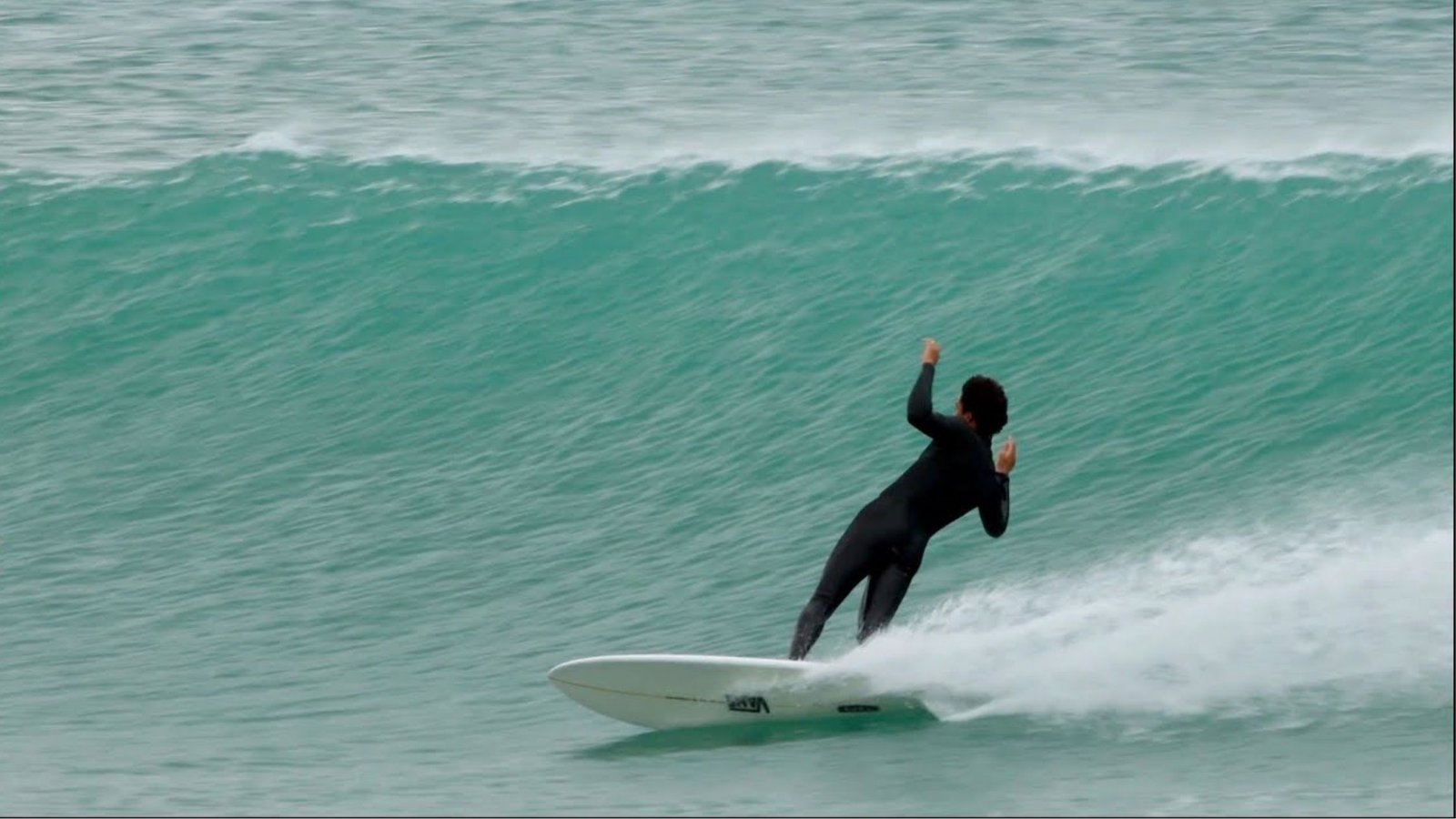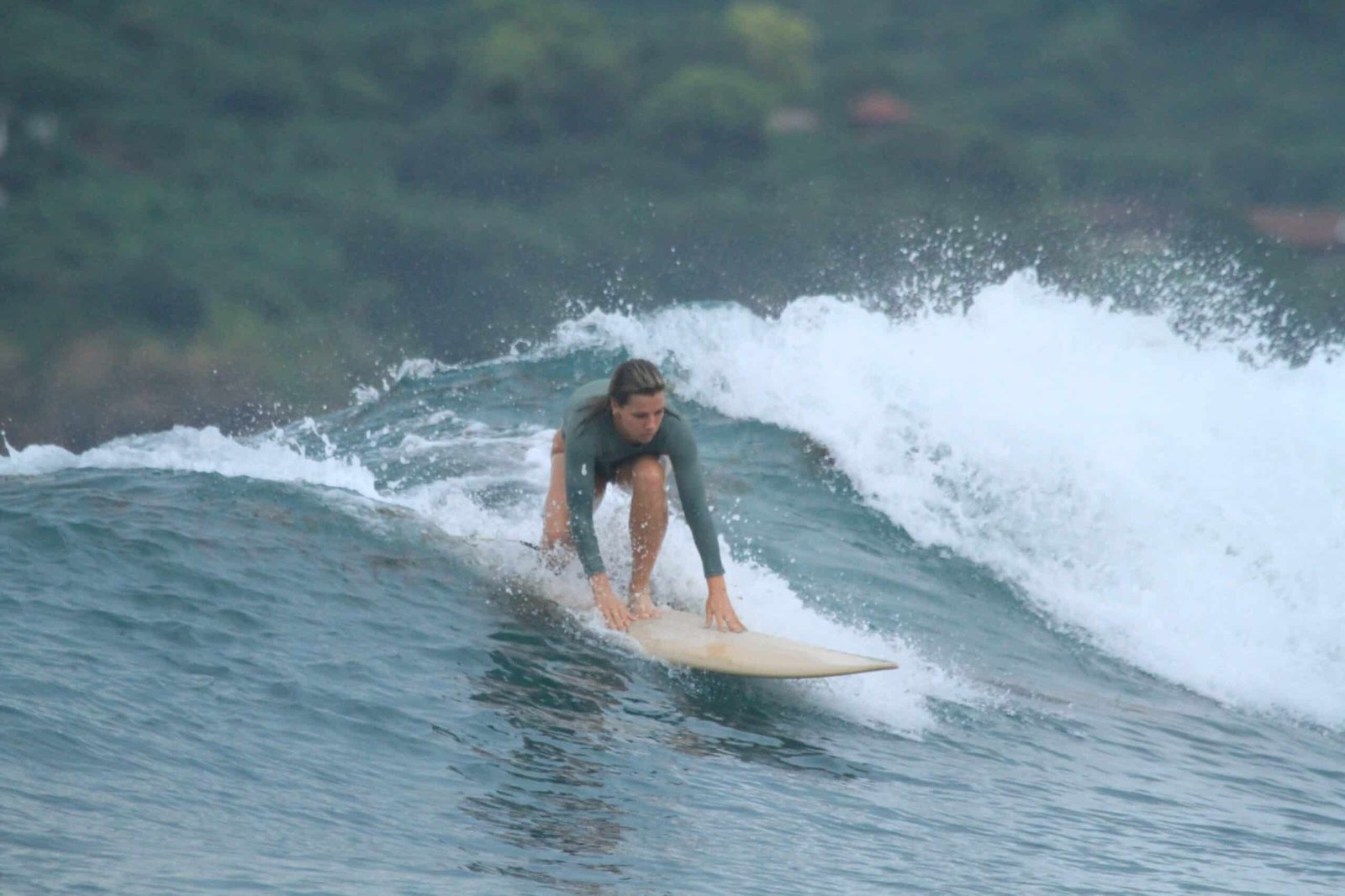
The paddle out is where most beginners and intermediates burn themselves out before they've caught a single wave. Getting past the break efficiently isn't about being strong, it's about using the right technique for the conditions.
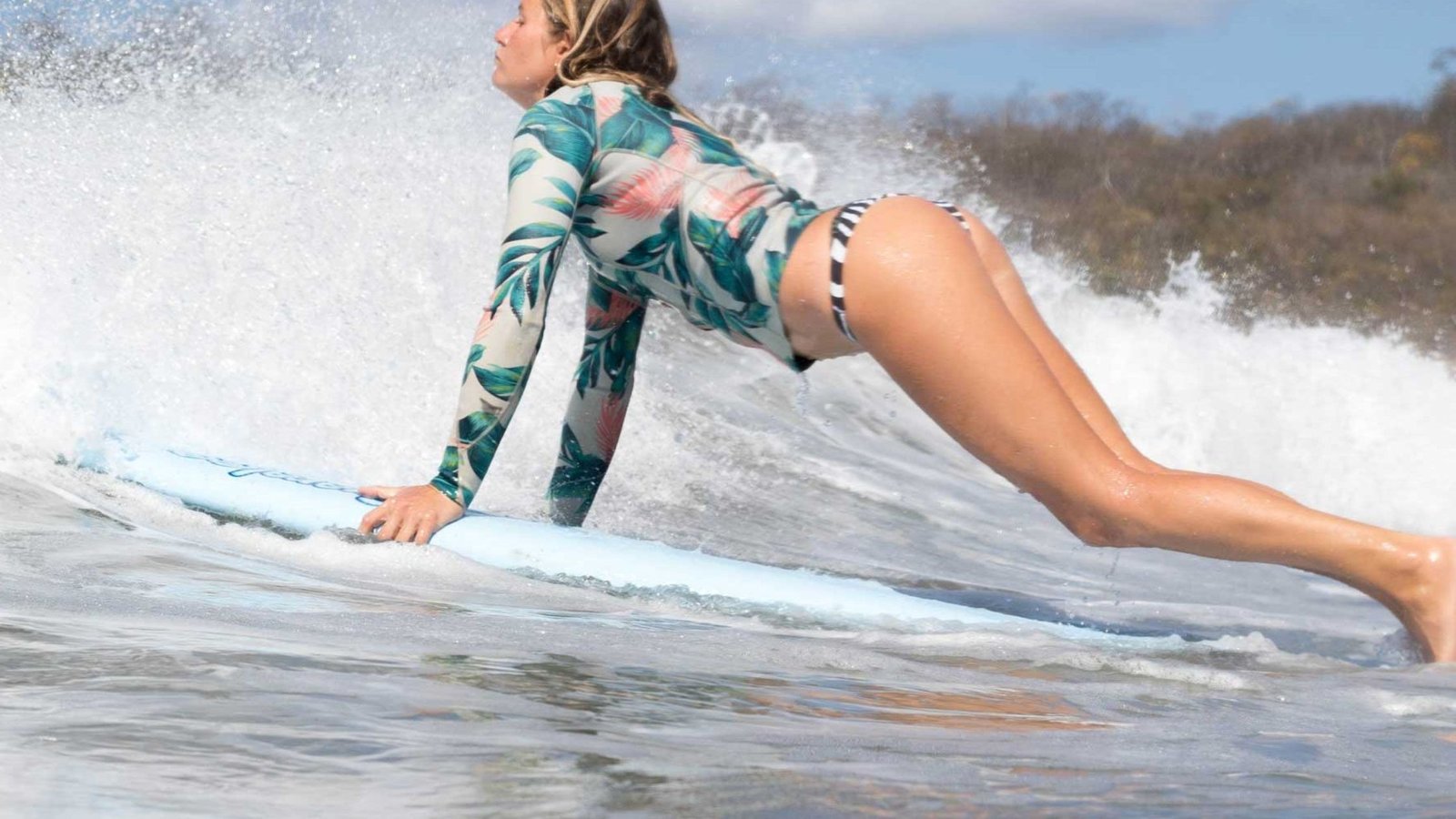
On a big foamy or longboard at a beach break like Orewa or Mangawhai, your main tool is the push through. As a wave of whitewater approaches, paddle hard toward it, then push up into a cobra position. Hands on the deck, chest and head lifted, letting the water flow between you and the board. One leg kicked up helps shift your weight forward. The foam wall hits, you hold on, and you're through.
For bigger whitewater on a longboard, the turtle roll is your answer. Roll onto your back with the board inverted on top of you, holding the rails. Let the wave pass over you both, then roll back and keep paddling. It takes practice, the timing needs to be right, but once you have it, it's remarkably effective even in solid surf.
If you're on a shortboard, duck diving is the technique. Pushing the nose under with your hands and using your knee or foot on the tail to angle the board beneath the wave. The key is to get deep enough. Half hearted duck dives where you barely go under will have you getting pushed back every time.
One often overlooked tip: watch the ocean before you paddle out. From the beach, you can see the lulls between sets. That's your window. Paddling out during a lull means you're fighting individual waves rather than a full set.