Positioning in the lineup is one of those skills that separates surfers who always seem to be in the right place from those who are constantly scrambling. It's not luck, it's a combination of observation, anticipation and quick decision making.
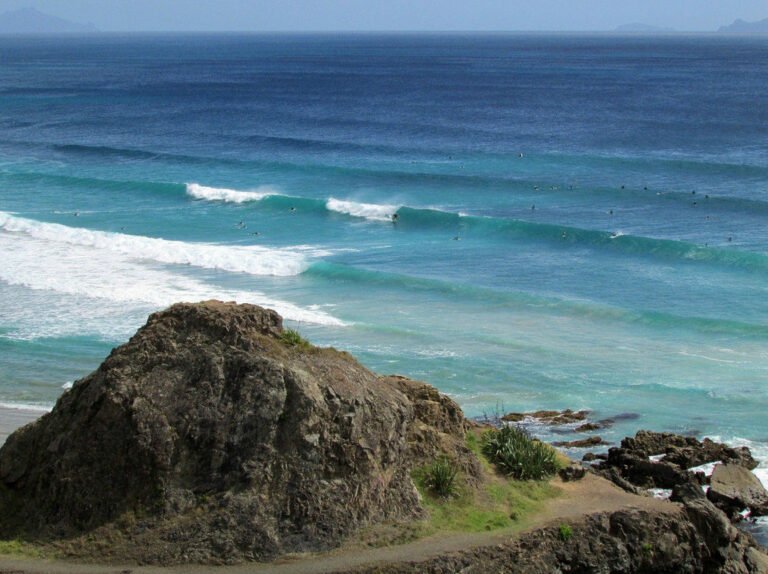
The first rule: watch before you paddle out. Spend a few minutes on the beach identifying where the waves are breaking most consistently, where experienced surfers are sitting, and where the channel is. At a beach break like Te Arai, the peak can shift depending on the sand bars and the swell direction. Fifteen minutes of observation will tell you more than an hour of paddling around in the wrong spot.
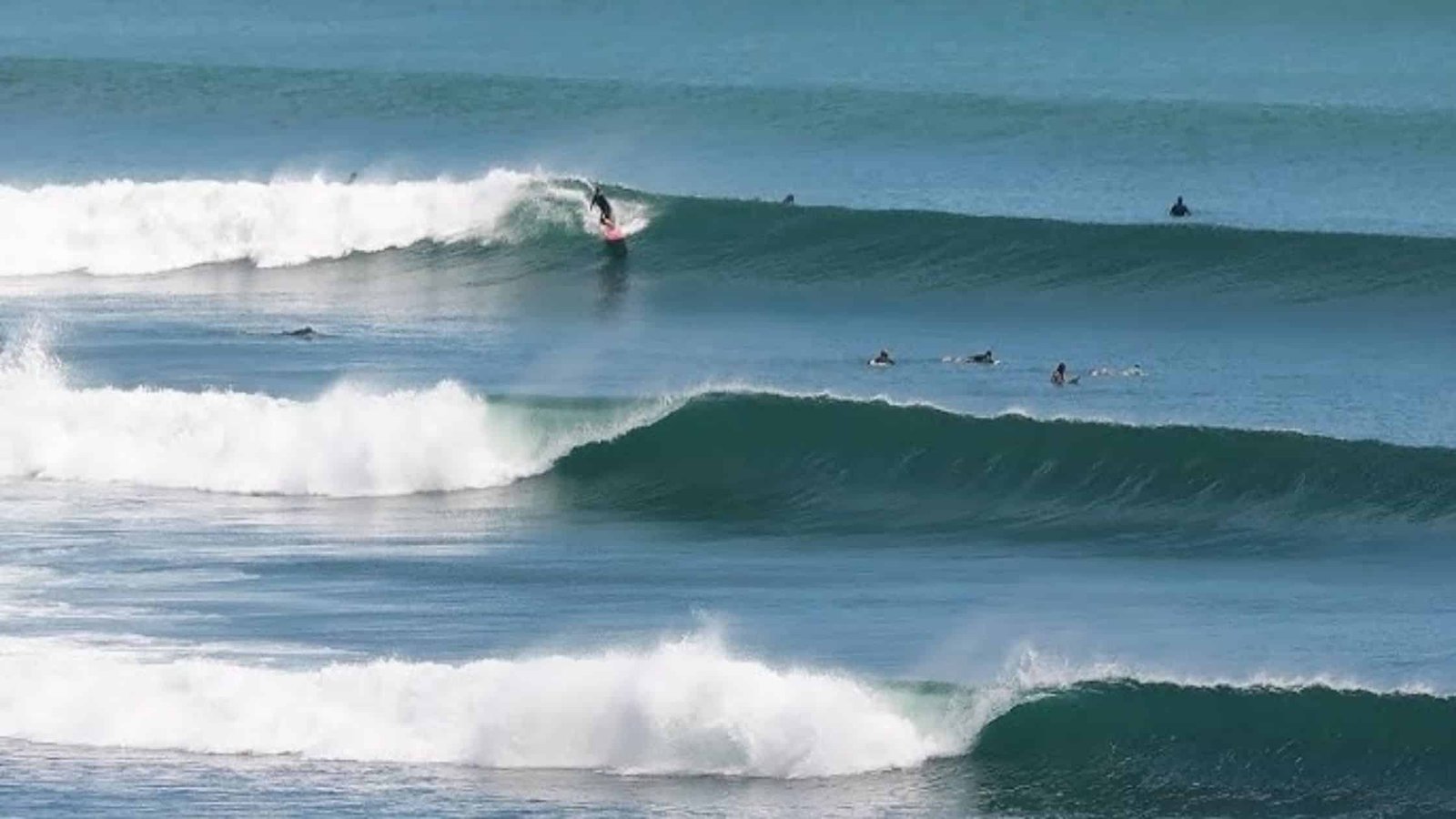
Use indicators. The foam line left by the previous wave is a temporary map of where the break is. Experienced surfers nearby are your best indicator, watch where they position themselves for takeoff, not where they paddle around. A fixed point on land (a pohutukawa, a house, a headland) keeps you anchored in a shifting ocean.
Once you're in the right spot, stay proactive. As you see a wave approaching on the horizon, you have a few seconds to make a decision: go for it, let it go, or paddle over it. That decision needs to happen fast. The surfers catching the most waves aren't the ones who wait, they're the ones who've already started paddling before the wave has fully formed.
In a crowded lineup, respect priority. If someone is deeper (closer to the peak), they have right of way. Paddling for waves you don't have priority on wastes energy and creates conflict. Pick your waves, position well, and let the set waves come to you.