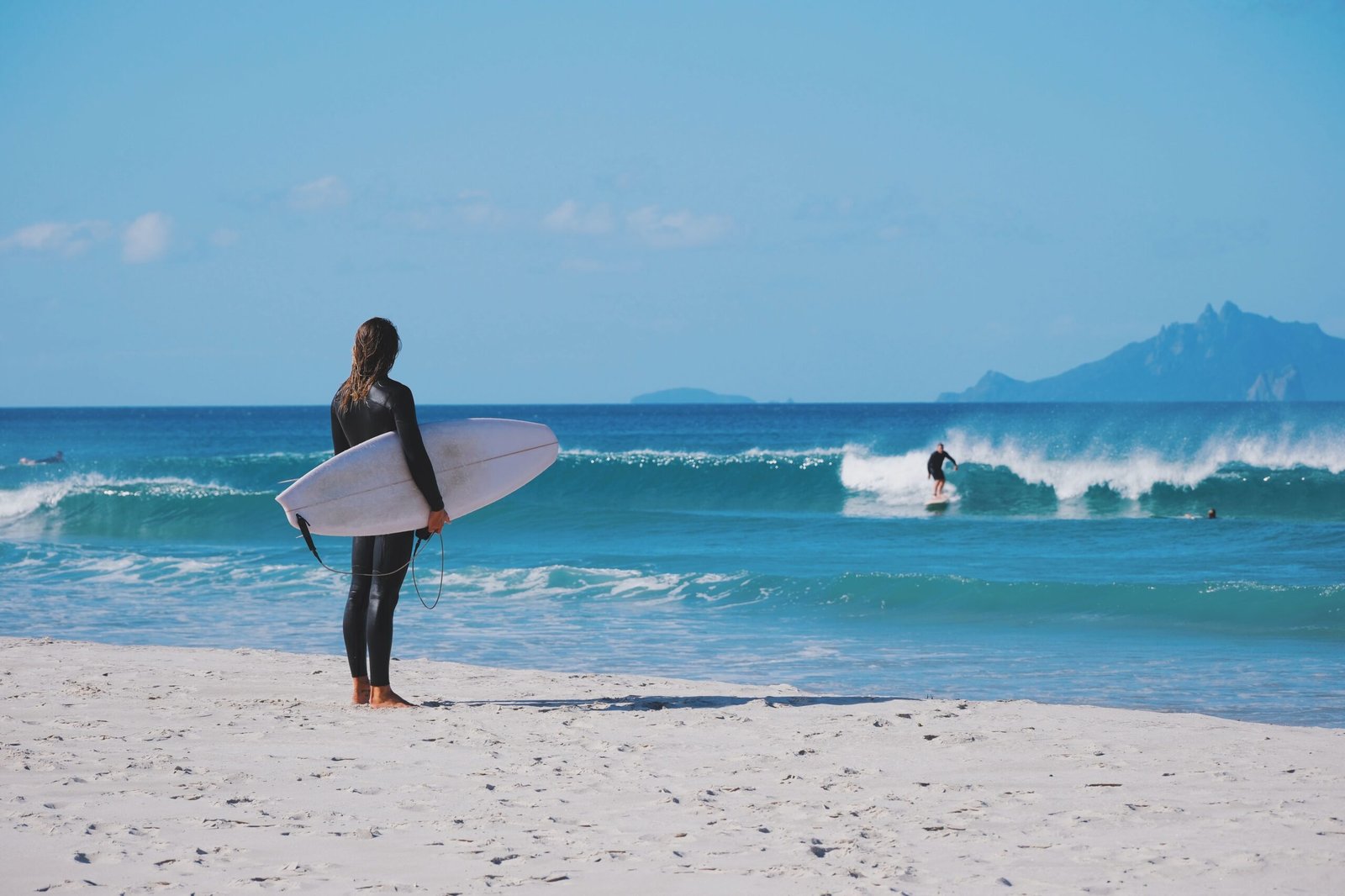
Every wave tells you where it's going before it breaks. Experienced surfers are reading that information constantly, the angle of the shoulder, the colour and steepness of the peak, the speed of the peel. Beginners see a wave coming and react. Experienced surfers see a wave on the horizon and are already paddling into position.
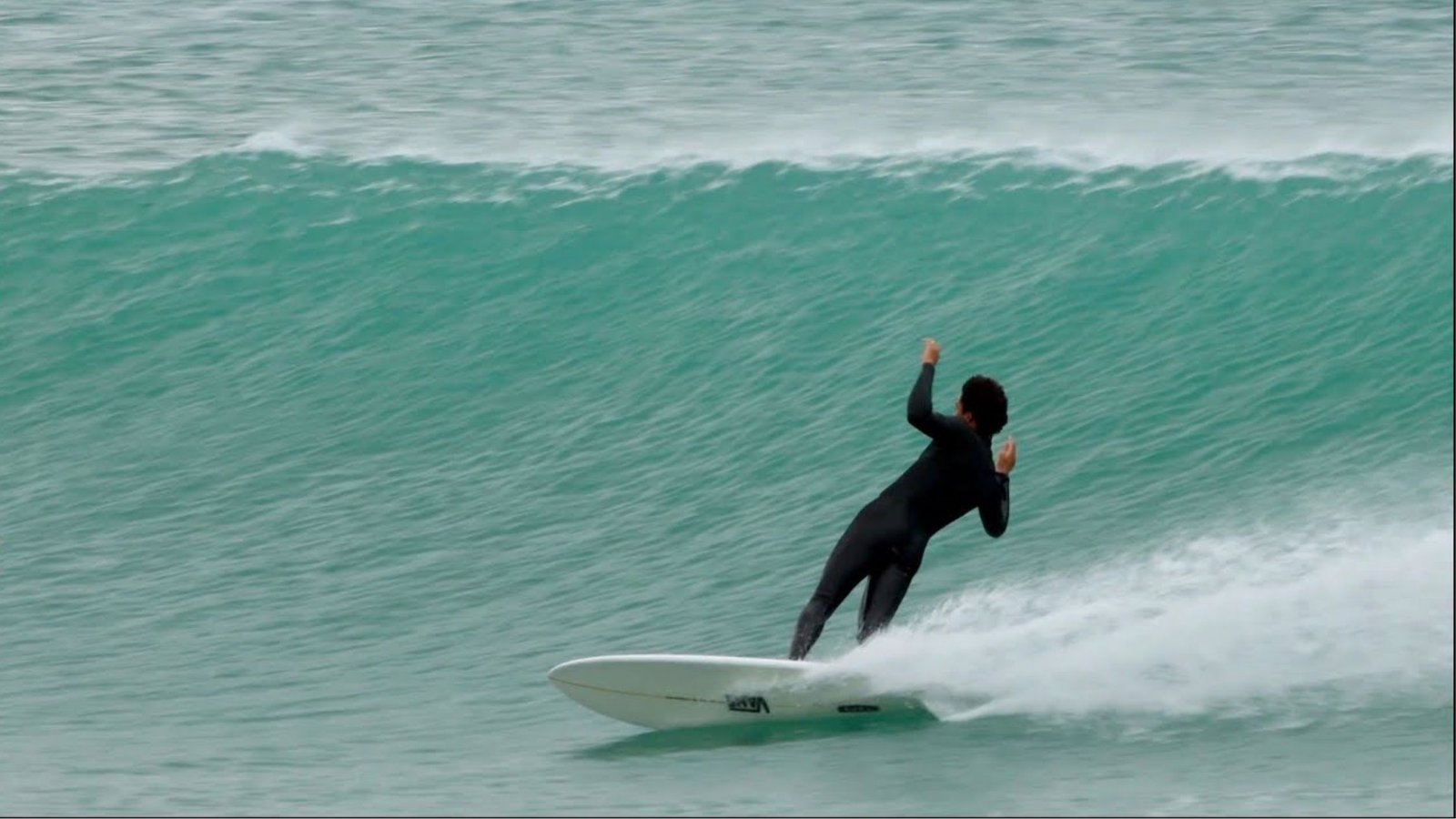
Start by categorising waves: rights, lefts, A-frames and closeouts. A right peels to the right from the surfer's perspective (not from the beach). An A-frame peaks in the middle and can be surfed either way. A closeout hits all at once, if you see the lip pitching along the entire length of the wave simultaneously, let it go.
The peak is your reference point. Look for the darkest, steepest, highest part of the approaching wave, that's where it will break first. Ideally you want to be just to the shoulder side of the peak when you take off, so the wave is breaking toward you rather than closing out in front of you.
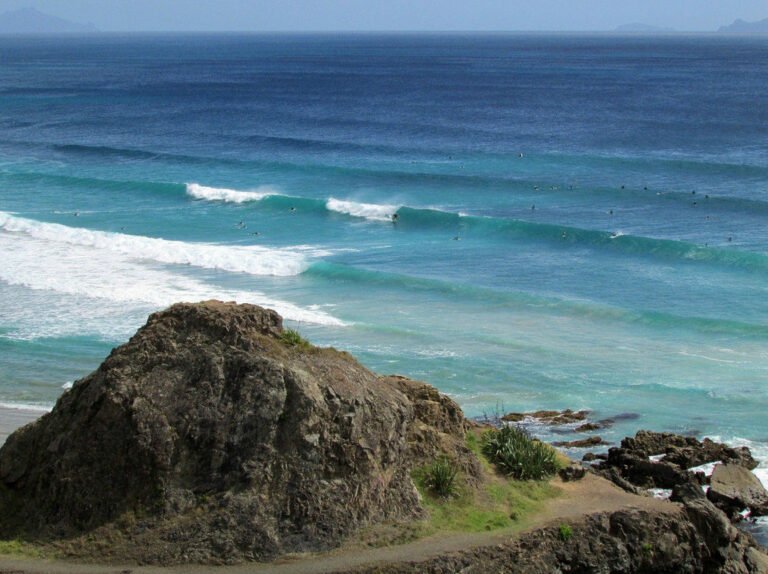
At spots like Sumner or Mangawhai, where the waves can be powerful and unpredictable, reading the shoulder angle tells you whether a wave is worth catching. A steep shoulder angle means a fast peeling wave, exciting for advanced surfers but tough for beginners who can't yet generate enough speed to stay ahead of it. A flatter shoulder angle means a slower, more forgiving wave, ideal for working on technique.
Use landmarks. Pick a rock, a tree, a fence post, something on the beach that's level with where the waves are breaking. If you drift in the current (and at most NZ beaches, you will), you'll know immediately because your landmark will have shifted. Repositioning before you lose your spot is far easier than paddling back against a current.